As an Amazon Associate, we earn from qualifying purchases. Some links on this site are affiliate links at no extra cost to you. Our recommendations are based on thorough research and editorial judgment.


What Types of Running Lights Are Available for Night Running?

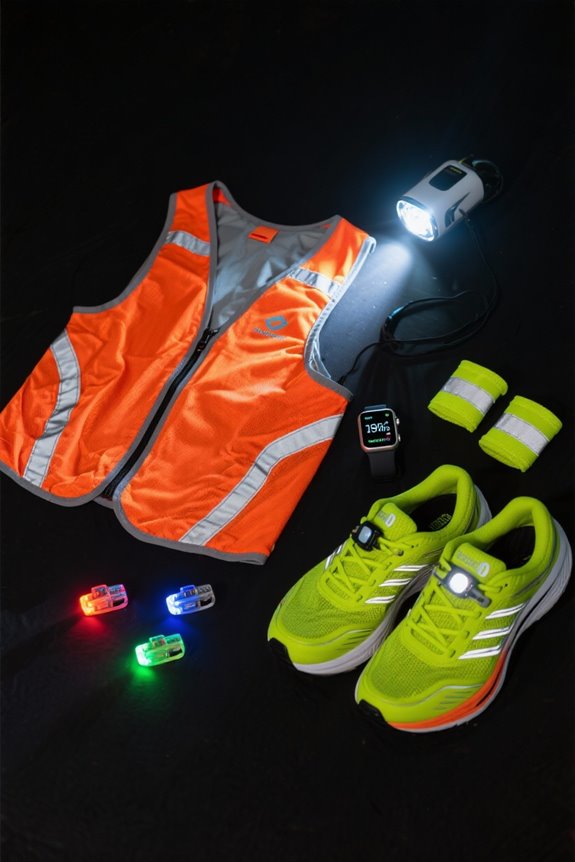
When choosing lights for night running, I recommend headlamps for hands-free navigation with brightness levels from 200 to 1600 lumens. Clip-on lights are lightweight and easily attachable, priced from $20 to $60. For safety, consider body-mounted lights that offer 360-degree visibility. Shoe lights provide ground illumination, while handheld options like knuckle lights are great for dynamic lighting. Don’t forget to check their waterproof ratings and reflective gear for added safety. Keep exploring to discover more details!
Key Takeaways
- Headlamps provide hands-free lighting with adjustable brightness and beam distance, suitable for navigation during night runs.
- Clip-On Lights are lightweight and portable, enhancing visibility with steady or strobe modes for added safety in low-light conditions.
- Body-Mounted or Vest Lights offer 360-degree illumination, rear-facing features, and long battery life, ensuring maximum visibility for safer running.
- Shoe Lights attach to laces, providing ground illumination and rear-facing LEDs, enhancing safety with a 360-degree view.
- Handheld and Knuckle Lights feature dynamic lighting with ultra-wide beams, ideal for versatile use during nighttime running.
Headlamps for Hands-Free Navigation
When you’re out running at night, having a reliable headlamp can make all the difference in ensuring your safety and visibility. Think about it: a good headlamp serves hands-free navigation, allowing you to spot obstacles ahead without stumbling like a newborn deer. When making a headlamp comparison, consider brightness levels; for casual runs, around 200 lumens works, while ultra-distance runners might need over 1600 lumens. Additionally, beam distance matters—lower-end models project about 36 meters, whereas high-output lights reach over 400 meters. Battery life varies, too—some last just 3 hours on high, while others offer over 12 hours on lower settings. And don’t forget, future trends in lighting technology make these tools easier to use and more efficient than ever! Moreover, higher lumens improve visibility in extreme conditions, making it crucial to select the right brightness for your running environment.
Clip-On Running Lights for Visibility

While heading out for a run in low-light conditions, you’ll find that clip-on running lights can be a game changer for your visibility and safety. These small, portable devices easily attach to your clothing or gear, providing fantastic clip-on benefits. Depending on the model, you can choose from steady lights or strobe modes that enhance your visibility features. Plus, they’re lightweight, so you won’t even notice them while you run! For around $20 to $60, options like the Nathan HyperBrite Mini or Knog Wearable Lights offer solid performance. Just remember, the brighter and easier to spot you are, the safer you’ll feel out there. After all, who doesn’t want to be seen while they’re sweating and struggling, right? Additionally, investing in high-visibility running lights can significantly increase safety during nighttime activities.
Body-Mounted or Vest Lights for Safety

Body-mounted or vest lights can greatly enhance your safety when running at night. These lights come with various mounting options, like clips or straps, making them easy to attach to clothing or gear. I appreciate vest lights for their built-in pockets that keep everything secure while I’m on the move. The visibility benefits are remarkable; with 360-degree illumination and rear-facing features, I’m visible to vehicles from nearly 2,400 feet away. Plus, multiple flash modes help alert others without causing a disco party effect—trust me, I’ve been there! With weights around 5 to 6 ounces and battery life spanning 8 to 12 hours, you won’t even notice they’re there. Additionally, many models offer multiple brightness modes, allowing you to adjust the light output based on your running environment. So, invest in one for your next night run!
Shoe Lights for Ground Illumination

Enhancing nighttime visibility doesn’t just stop with body-mounted lights; shoe lights play a significant role in ensuring safety and clarity on your runs. With shoe light designs that clip onto laces or integrate as LED strips, you’ll illuminate the ground beneath you, which proves beneficial on uneven terrain. Many models, often featuring rear-facing red LEDs, provide a 360-degree safety solution, ensuring you’re seen by others. Typically, these lights generate around 150 lumens, illuminating up to 30 meters ahead. Battery life varies from 2.5 to 4 hours, making them ideal for most runs. Plus, USB rechargeable batteries keep downtime minimal. All in all, investing in shoe lights enhances footing awareness while keeping your night runs enjoyable and safe—what’s not to love? Additionally, high-visibility gear is crucial for ensuring the safety of night runners.
Handheld and Knuckle Lights for Dynamic Lighting

If you’re looking for a way to light up your night runs without being weighed down by bulky gear, handheld and knuckle lights might be just what you need. These lights usually come as single or paired units, designed to strap around your knuckles for stability while running. The handheld convenience allows for dynamic lighting that moves with your arm swings, illuminating the path ahead and to the sides effectively. Most models feature ultra-wide flood beams and multiple brightness settings to enhance visibility for 2.5 to 5 hours, keeping you safe from unexpected pedestrians or obstacles. Priced around $60, they offer practicality without weighing you down—definitely a win for night runners looking to stay light and nimble! Additionally, many of these lights have brightness levels that can reach a minimum of 200 lumens, ensuring optimal visibility during evening runs.
Advanced Features in Running Lights
As you step into the world of night running lights, you’ll find that advanced features can greatly enhance your experience. For instance, adaptive lighting technologies use sensors to adjust beam intensity based on ambient light and your running speed, ensuring you’re always visible. Some lights even incorporate smart features like motion detection to change beam angles with your head movements. This can prevent glare for oncoming pedestrians, which, let’s be honest, saves everyone from feeling like deer in headlights. Many of these premium models also come with rechargeable batteries and battery life indicators, allowing for longer run times. Look for lights with Bluetooth connectivity; they let you control settings right from your phone, making night runs feel much more high-tech. Additionally, consider the importance of brightness and visibility options to ensure you’re seen from a safe distance.
Choosing the Right Lumen Output
When choosing the right lumen output for your night running lights, it’s essential to reflect on how brightness can impact your safety and overall experience. A good lumen selection depends on where you’re running; for smoother roads, 100-200 lumens usually does the trick, while countryside paths might need 100-300 lumens. If you’re tackling forests or dark trails, you’ll want around 200-600 lumens for safe navigation. However, don’t go overboard—too much brightness can cause glare for others. It’s all about finding that brightness balance that keeps you safe without blinding oncoming runners. So, think about your environment and adjust your light accordingly; after all, no one wants to trip over that sneaky tree root! Additionally, high-quality blue LEDs can provide visibility from up to 1,000 feet, ensuring you remain seen by both motorists and pedestrians.
Battery Life Considerations for Night Running
Brightness levels matter for safety during night runs, but battery life can make or break your experience. Understanding battery types and effective runtime management is essential. For instance, a headlamp may last an impressive 160 hours at 1 lumen, but only 5-8 hours when cranked up to 40-190 lumens. Most running lights give you 2 to 6 hours at 200-300 lumens, which is common for night jogs. Consider using rechargeable batteries for better energy density, but make sure they’re fully charged before your run; they can also be paired with disposables for longer distances. Remember to check battery life indicators—losing light mid-run is like getting ghosted by your favorite playlist. Some models even have energy-saving modes to extend your run time without sacrificing brightness. Additionally, rechargeable models generally last longer with good care, making them a smart investment for avid runners.
Waterproof and Weather-Resistant Options
Choosing the right running light involves more than just picking your favorite color; waterproof and weather-resistant features are critical for consistent performance during night runs. When I look for running lights, I check the waterproof ratings. For instance, an IPX4 rating can handle splashing water, perfect for light rain, while IPX7 offers immersion for heavy downpours, ensuring you won’t be left in the dark after stepping into a puddle. Options like rugged headlamps often come with an IP67 rating, providing a great balance of durability and light output. Keep in mind that clip-on lights usually have lower weather resistance, often around IPX3, limiting their use in bad weather. It’s worth investing in a light that can weather the storm alongside you! Weather-resistant features ensure reliable performance in outdoor conditions.
Reflective Components in Running Gear
After ensuring your running light can withstand the elements, it’s time to think about reflective components in your running gear. Reflective benefits aren’t just cosmetic; they greatly enhance your gear visibility during nighttime runs. Look for jackets and vests with large reflective panels—these can be up to 50 times brighter than regular materials, making you a beacon for motorists. Additionally, reflective shirts and tights with strategically placed stripes help maximize your detection. Don’t forget accessories like reflective socks and shoes; reflective overlays on your footwear can make a difference in low-light situations. Ultimately, investing in reflective gear contributes to your safety, allowing you to extend your running hours without being an unintentional game of dodgeball with cars. Moreover, incorporating reflective safety features into your running gear can significantly improve your visibility while you enjoy those nighttime runs.
Multi-Mode Lighting for Versatility
When it comes to night running, having a multi-mode lighting system can really make a difference in your visibility and safety. The multi mode benefits include options like steady-on for continuous light, which is essential when you’re traversing dark paths. Flashing modes can grab attention, especially in busy areas, making it safer to run. Adaptive lighting features are incredibly useful; dimming modes let you adjust brightness based on your environment, conserving battery life. High-quality LEDs enable rapid switching without delay, ensuring you can change modes instantly. With prices generally ranging from $30 to $100, investing in a reliable multi-mode light is smart. Plus, it’s a great conversation starter—nothing says, “I’m serious about night running,” quite like a fancy light setup!
Comparing Different Types of Running Lights
Although the variety of running lights can be overwhelming, understanding the different types available can help you make an informed choice tailored to your night running needs. Headlamps, for instance, offer hands-free convenience with adjustable angles and intense focus. Clip-on lights are lightweight and perfect for extra visibility, but don’t expect them to illuminate your path. If you prefer something dynamic, shoe or ankle lights add visibility with motion, while waist or belt lights guarantee 360-degree awareness. When considering light color selection, remember that brighter options improve safety. And don’t overlook weight considerations—heavier lights can weigh you down. Ultimately, the right choice balances your visibility needs with comfort and practicality, allowing you to run safely through the night without feeling like a pack mule!
Frequently Asked Questions
How Do I Choose the Best Running Light for My Specific Needs?
When I choose a running light, I focus on brightness levels for my environment and battery life for my runs. Balancing these factors helps guarantee I stay safe and visible while enjoying my nighttime exercise.
Are There Any Eco-Friendly Options for Running Lights Available?
Yes, I’ve found some great eco-friendly options! I love my solar-powered running light, and I also use rechargeable batteries for another. They’re practical and reduce waste while keeping me visible during my nighttime runs.
How Do I Care for and Maintain My Running Lights?
To care for my running lights, I use gentle cleaning techniques to keep them clear and check for battery maintenance regularly. This guarantees they’re always ready for my nighttime runs and provides peak visibility.
Can I Use Running Lights for Activities Other Than Running?
I’ve used my running lights for various alternative activities like hiking and cycling. Their versatile lighting shines bright, making them perfect for hands-free illumination when I need to navigate different outdoor environments.
What Are the Safest Settings for Nighttime Running With Lights?
When I run at night, I keep visibility factors in mind, positioning my lights strategically. A steady front light shows the path, while flashing rear lights alert others, ensuring a safe, illuminating journey through the darkness.