As an Amazon Associate, we earn from qualifying purchases. Some links on this site are affiliate links at no extra cost to you. Our recommendations are based on thorough research and editorial judgment.

How Do I Stay Visible When Running in Low Light Conditions?

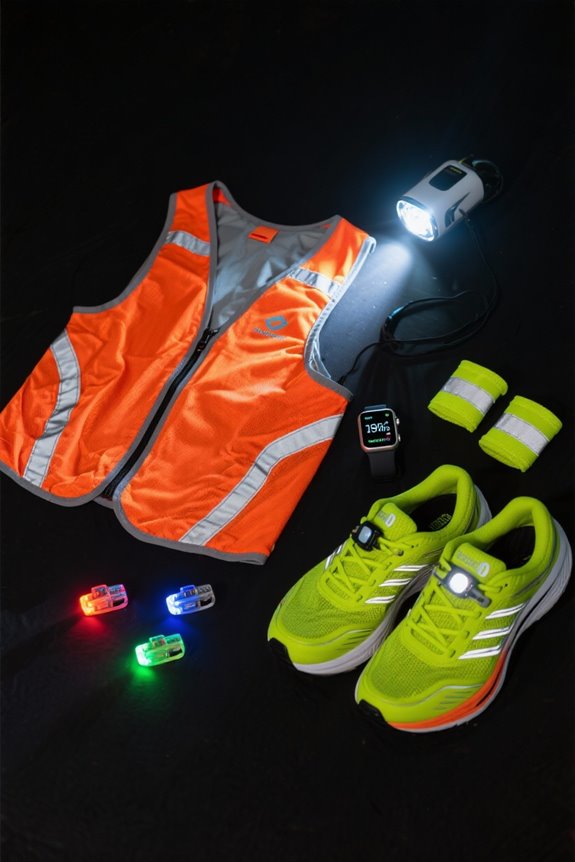
To stay visible when running in low light, wear high-visibility clothing in fluorescent yellow-green or fluorescent orange-red. This combo really stands out! Opt for reflective gear, especially with reflective strips on your arms and legs, which makes a big difference. Using headlamps improves your visibility and lights your path. Don’t forget about group running for added safety and visibility. Keep an eye out for innovative gear too; you’ll discover more ways to enhance your nighttime runs!
Key Takeaways
- Wear high-visibility clothing in fluorescent colors, such as yellow-green or orange-red, to enhance daytime visibility.
- Utilize reflective gear that covers major joints and the torso to improve nighttime visibility and reduce collision risks.
- Equip yourself with a headlamp to illuminate your path and increase visibility to others while running at night.
- Consider body-mounted and clip-on lights for broader illumination and ease of attachment, helping to reveal trip hazards.
- Run with a partner or group in well-lit areas to increase safety and social visibility during low-light conditions.
The Importance of High-Visibility Clothing
When it comes to running in low-light conditions, one of the most essential things you can do is wear high-visibility clothing. The hi-vis benefits are undeniable; reflective materials bounce light back to drivers, greatly enhancing your chances of being seen. This means that reflective strips placed strategically on your apparel, like your chest and legs, can make you stand out—literally saving your life! Visibility psychology plays a role here too; wearing such clothing boosts your confidence, reducing stress about safety. Plus, modern reflective gear is lightweight and breathable—no need to feel like you’re running in a sauna! So, grab a reflective vest or belt, and lace up—your safety and peace of mind are worth it! Additionally, combining high-visibility clothing with multiple attachment options for lights can significantly increase your visibility during nighttime runs.
Choosing the Right Colors for Visibility

Choosing the right colors for visibility can greatly enhance your safety while running in low-light conditions. Visibility research shows that fluorescent yellow-green is the best all-around choice during the day. It’s the most visible color due to the human eye’s heightened sensitivity to wavelengths around 550 nm. As daylight fades, combining fluorescent yellow-green with fluorescent orange-red or red improves visibility dramatically. This color psychology lies in our eyes shifting to rod-dominated vision at dusk, where reds and oranges become more prominent. For night runs, adding retroreflective elements to your outfit can further improve detection. Additionally, wearing shoes with arch support is crucial for comfort and stability while navigating low-light environments. So, when picking your gear, think fluorescent and reflective, ensuring you’re well-seen—because nobody wants to play hide and seek with a car at dusk!
Reflective Gear: Enhancing Nighttime Safety

Visibility is key for runners at night, and reflective gear plays a significant role in ensuring safety. I’ve found that employing reflective visibility techniques, like wearing gear on major joints such as ankles and wrists, boosts my profile to drivers. You’ll want to take into account retroreflective materials, which bounce light back, making these items highly effective in low-light conditions. Broad reflective coverage on the torso and legs keeps me visible even when my limbs are still, while reflective vests, like the Noxgear Tracer2, offer great all-around visibility. Don’t forget reflective shoes or socks, as they utilize biomotion to grab driver attention early. Investing in good reflective gear can truly reduce the risk of collisions and enhance your nighttime running experience. Additionally, using Nathan running lights can further improve visibility and safety during your runs.
Understanding Reflective Materials

Reflective materials, which are essential for nighttime safety, come in various types and technologies designed to enhance visibility. Primarily, retroreflective materials bounce light back toward the source, maximizing my visibility when I run at night. You’ll often find micro glass beads or prismatic tape integrated into clothing; prismatic materials tend to be brighter and more durable. To maximize reflective efficiency, I recommend placing reflective elements on major movement areas, like legs and arms, and incorporating reflective headwear. It’s important to know that some materials even combine reflective and fluorescent components for versatile visibility. Always look for items meeting visibility standards, as they guarantee a minimum reflectivity necessary for safe running conditions, keeping you and other road users alert and safe. Additionally, incorporating high-visibility running lights can further enhance your safety during nighttime runs.
The Role of Lighting Accessories

When you’re out running in low light, having reliable lighting accessories can make a world of difference. Selecting accessories like clip-on lights and waist-mounted lights can greatly enhance your visibility. Clip-on lights offer 360-degree visibility and easily attach to clothing, while waist lights provide brighter illumination at your hip, reducing ground obstacles. Higher brightness levels, ranging from 500 to 800 lumens, keep you well-lit. For effective light placement, consider front and rear combinations to maximize your visibility to others. Make sure your gear is weather-resistant and rechargeable, with a battery life of 6 to 12 hours, depending on settings. Additionally, different light options allow you to choose the best fit for your running needs. Trust me, running in the dark becomes much less intimidating with the right lighting tools at your side!
Benefits of Headlamps for Night Running
Using a headlamp for night running can greatly enhance your experience, offering benefits you might not have considered. The headlamp advantages are significant—first, they increase your visibility to others, reducing the risk of collisions with vehicles and cyclists. Even a basic headlamp illuminates your path, allowing you to see about 20 feet ahead to avoid obstacles. Plus, they’re lightweight and designed for comfort, so you won’t feel weighed down. Headlamps also adapt to various running environments, making it easier to train anytime. Who needs a nightlight when you can wear one? Invest in a reliable headlamp, and with prices ranging from $20 to $60, staying safe while enjoying the freedom of night running is worth every penny. Additionally, features like adjustable beam angles provide flexibility in illuminating specific areas, enhancing your safety on trails.
Supplemental Lighting Solutions
While you might think a headlamp is the only solution for running in low light, there are several supplemental lighting options designed to enhance your visibility. Body-mounted lights like the NoxGear Tracer 2 provide broad illumination, covering multiple angles with various light modes. Magnetic clip-on lights, such as the Avanto Pro Magnetic Running Light, attach easily to your gear, offering an extra layer of visibility without the bulk. Footwear lighting, like the Night Runner 270, illuminates the ground below and increases safety by revealing trip hazards. Waist-mounted devices, such as the UltrAspire Lumen 800 Solstice, enhance terrain perception. These rechargeable systems are smart options for anyone wanting to boost their visibility solutions and keep safe while running in the dark. Additionally, lights with multiple brightness settings can significantly enhance visibility during night runs by adapting to different conditions.
Practicing Environmental Awareness
Staying vigilant about your surroundings is essential for safe running, especially in low light conditions. I always check the weather beforehand and adjust my gear accordingly, like opting for a rain shell if needed. Keeping spatial awareness is significant; I avoid headphones to better hear environmental cues, like approaching traffic or wildlife. I focus on well-lit paths and look out for obstacles like wet leaves that could lead to slips. It’s important to observe sudden changes in sounds, which might signal danger. Letting a friend know about my route gives me peace of mind too. By being mindful of my environment, I can enjoy my runs while staying safe and visible, even when it’s dark out. Additionally, using reflective gear can significantly enhance visibility to drivers, making nighttime running much safer.
Choosing Safe Running Routes
When choosing safe running routes, it’s crucial to prioritize well-lit areas, as they greatly reduce the likelihood of accidents and enhance your overall visibility. Using my local area knowledge, I map out illuminated streets, parks, and paths, steering clear of unlit routes whenever possible. Technology is a great ally here—many mapping apps allow you to customize settings to avoid poorly lit areas, ensuring route adaptability based on conditions. I recommend seeking out neighborhoods that have active foot traffic; this not only boosts your safety but also makes for a more enjoyable run. Joining local running clubs can offer insights into safe routes too, saving you from traversing unfamiliar, dimly lit paths on your own. Additionally, advanced cushioning technology in running shoes like the Vaporfly models can provide added comfort and support during evening runs.
Effective Body Positioning While Running
Effective body positioning is essential for maximizing your visibility while running in low light conditions. I try to maintain an upright posture, with my chest forward to showcase the reflective gear on my torso. This increases exposure to oncoming traffic. I keep my arms swinging naturally but avoid any movements that might obscure reflective patches; good arm movement enhances wrist visibility. Whenever I run on roads without sidewalks, I always face traffic—it’s a surefire way to be seen. I also adjust my running line to maximize the exposure of my reflective gear to light sources, steering clear of curbs and shadows. Using open body positioning rather than a hunched stance gives me a larger surface area to be spotted by drivers. Additionally, wearing a reflective vest with integrated lights can significantly improve your visibility in dark conditions.
Movement and Visibility
Although it might seem tempting to run in the same predictable patterns every time, varying your movement can greatly enhance your visibility during low light conditions. By changing your movement patterns, you become a more dynamic target, making it easier for drivers to spot you. For example, consider wearing reflective gear on your limbs, which highlights your movements and increases your chances of being noticed. Adding lights, like a headlamp or clip-ons, can also create an eye-catching effect, especially when they’re in flashing mode. Running on well-lit paths allows you to capitalize on existing light sources, reducing the risk of tripping over obstacles. By mixing up your routes and movements, you not only boost your visibility but also keep your runs exciting!
The Impact of Group Running on Safety
Running in a group can markedly boost your safety, especially when you’re out in low-light conditions. Engaging with small, trusted groups enhances safety perception and fosters community engagement. The presence of multiple runners offers mutual support, increasing social visibility. Additionally, these group dynamics create allyship opportunities, allowing everyone to share responsibility for one another’s safety.
With over 90% of women expressing safety concerns, running in groups can reduce feelings of vulnerability, especially against potential harassment. Planning routes in well-lit areas and using shared location apps can improve risk awareness, making your outing safer. Plus, let’s be honest—having running partners beats going solo, and it’s always more fun to complain about the weather together!
Innovations in Visibility Apparel
When it comes to staying visible during those evening runs, innovative visibility apparel can make a significant difference. Reflective design trends now feature advanced prismatic strips and strategically placed reflective panels on jackets and leggings, ensuring maximum visibility from all angles. Smart fabric innovations include moisture-wicking textiles that keep you comfortable while retaining visibility features, making your run much more pleasant. For extra safety, look for gear with embedded LED lights or glow-in-the-dark elements—these not only catch attention but also add a stylish twist to your workout outfit. Finally, remember to check for full 360° reflective coverage, especially on moving parts like ankles and wrists, because you’d want drivers to spot you even when you’re zipping past like a pro.
Integrating Technology for Enhanced Safety
Visibility is essential for safe evening runs, especially as the days grow shorter. To enhance my safety, I integrate smart lighting and wearable tech into my gear. I prefer visibility gadgets like clip-on shoe lights, which provide 360-degree visibility at about 150 lumens. With motion sensors and adaptive technology, these lights adjust brightness according to my surroundings, making it easier to spot obstacles. I also value emergency signaling features; a quick tap can activate bright strobe modes to alert approaching vehicles. For long runs, I use lights with quick-swap batteries, ensuring I’m always prepared. By combining multiple lighting options with smart features, I notably reduce my risk on dimly lit trails, making every run a bit less intimidating.
Strategies for Maximizing Visibility
Maximizing visibility during evening runs can greatly enhance safety on dimly lit paths. I recommend wearing fluorescent clothing—bright yellows and oranges are fantastic choices. Reflective strips on your gear increase your visibility from all angles; think elbows, hips, and ankles. Also, don’t skip reflective accessories like wristbands or hats. They’ll catch drivers’ attention.
Headlamps with at least 200 lumens offer excellent pathway light and hands-free convenience. Choose adjustable models for ideal control. Remember, run against traffic and on well-lit paths. It’s part of good runner etiquette, helping others see you before it’s too late. And don’t fall for visibility myths; every little light—like a clip-on LED—counts. Your safety is worth the investment!
Frequently Asked Questions
What Time of Day Is Best for Running in Low Light?
I find early morning runs are peaceful and cool, while evening runs offer warmth and residual light. Each has its advantages, but I prefer the calm of early mornings for a invigorating start.
How Can I Safely Carry Personal Items While Running at Night?
When I run at night, I prefer using running accessories like waist packs or armbands. Reflective gear is essential to keep me visible while securely carrying my essentials, ensuring both safety and convenience during my runs.
Are There Specific Running Shoes for Low-Light Conditions?
Absolutely, there are running shoes designed for low-light conditions. I’ve learned that about 70% of accidents happen at night. Shoes with reflective features and advanced shoe technology enhance visibility and safety for nighttime runners like me.
Should I Inform Someone Before Running in Low Light?
Absolutely, I always inform someone before running in low light. It’s a crucial safety protocol, like running buddies do. Letting someone know my route enhances my safety and gives me peace of mind.
How Can I Improve Visibility Without Wearing Bright Colors?
You won’t believe how effective reflective accessories can be! I use quality illumination gear like headlamps and clip-on lights, ensuring I’m seen in low light. Trust me, it makes all the difference for safety.


