As an Amazon Associate, we earn from qualifying purchases. Some links on this site are affiliate links at no extra cost to you. Our recommendations are based on thorough research and editorial judgment.


What Are the Safety Tips for Running at Night?

When I run at night, I always gear up with reflective clothing and at least a 100-lumen headlamp—300 lumens if I’m hitting those darker trails. Running against traffic helps me spot cars earlier, and I usually stick to well-lit streets. I carry ID and have a charged phone, just in case. Plus, I check real-time air quality during pollution peaks to time my runs. Stick around, and you’ll discover even more safety strategies to keep you secure.
Key Takeaways
- Wear reflective gear combined with bright colors to enhance visibility to drivers and other pedestrians during night runs.
- Use quality lighting, such as headlamps or clip-on lights, to illuminate your path and ensure you are visible to others.
- Run against traffic on well-lit streets with higher foot traffic to increase awareness of vehicles and maintain safety.
- Inform a trusted contact of your route and carry identification, along with a charged cell phone for emergencies.
- Stay aware of environmental conditions, such as air quality and weather, and adjust clothing layers to ensure comfort and safety.
Importance of Reflective Gear
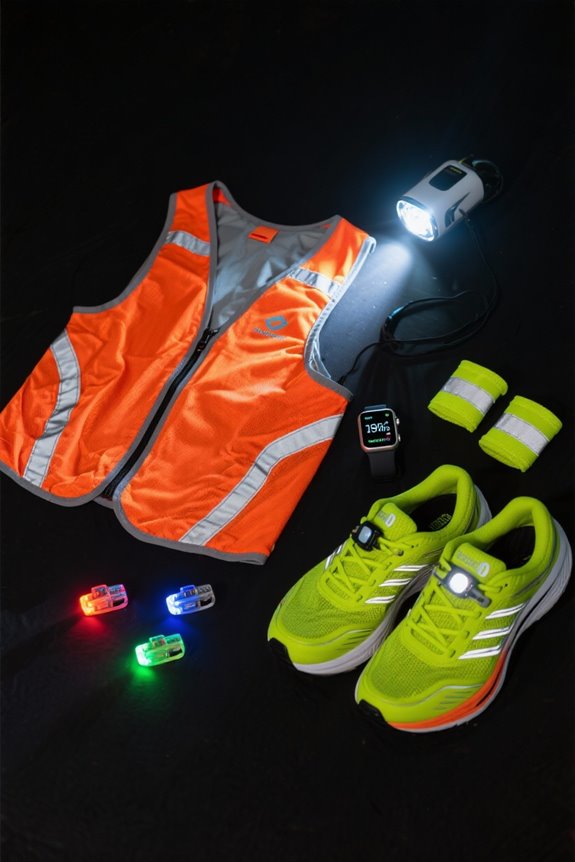
When it comes to running at night, wearing reflective gear is absolutely essential for your safety. Reflective gear benefits you by greatly increasing your visibility to drivers, which, let’s be honest, is crucial when you’re out on dimly lit roads. There are various reflective gear types available, including vests, jackets, and leggings from brands like Nike and Under Armour, featuring advanced retroreflective materials. These materials bounce light back to its source, enhancing your visibility, especially when placed on major joints like wrists and ankles. You’ll be surprised at how effective a simple reflective strip can be! For maximum safety, consider combining your reflective gear with bright colors and accessories like arm bands. Additionally, incorporating LED safety lights can significantly improve your visibility in low-light conditions. Trust me, you don’t want to be an invisible runner!
Enhancing Visibility With Lights

Visibility is key when you’re running at night, and investing in quality lighting can make all the difference. I can’t stress enough how useful headlamp usage is; they provide a stable light and free up your hands for balance. Aim for a headlamp with at least 100 lumens for urban runs or up to 300 lumens for darker trails. Clip-on lights are another great addition, easily attaching to your clothing or shoes to enhance visibility and indicate your movement. Opt for flashing clip-ons to catch drivers’ eyes better. By combining these lights with reflective gear, you’ll boost your visibility from all angles, making those night runs not just brighter but surprisingly safer. Remember, the more visible you are, the safer you’ll feel! Additionally, consider investing in rechargeable running lights to ensure you have dependable illumination throughout your runs.
Traffic Awareness and Behaviors

It’s easy to feel confident while running at night, especially with the right lights boosting your visibility. However, maintaining awareness of traffic is essential. Remember that accidents spike considerably at night, often when drivers are less attentive due to fatigue or impairment. That’s where driver awareness comes into play; they may not see you until it’s too late. To enhance your safety, run against traffic when possible, allowing you to see oncoming vehicles. Additionally, be proactive about your pedestrian behavior: wear bright, reflective clothing, and avoid dark outfits that blend into the night. If it’s raining or foggy, even more caution is necessary, since visibility drops considerably. Using high-visibility gear with 500LM brightness levels can significantly increase your safety by illuminating your path. Let’s stay safe out there while enjoying our night runs!
Choosing Safe Running Routes

Choosing the right running route at night can make a big difference in your safety, especially if you prioritize well-lit areas. When I plan my routes, I focus on streets with consistent lighting and higher foot traffic, as this helps with hazard anticipation. Avoiding dark parks or alleys is essential; they might seem like shortcuts but can be risky. I often use apps like Trail Router to map out my runs, ensuring I stay in populated zones. Familiarity with my running path creates a sense of security, allowing me to anticipate potential dangers. Plus, I find that running where others are present minimizes the chance of encountering trouble—because let’s face it, it’s just safer when you’re not alone in the dark! Additionally, using watches with GPS accuracy can help ensure you stay on the right track even in low-connectivity areas.
Running Position and Direction

When running at night, your position relative to traffic and your surroundings can critically impact your safety. I always run facing oncoming traffic to stay aware of approaching vehicles and guarantee drivers can spot me. Maintaining an upright running posture helps me stay alert and visible. I steer clear of edge curbs to avoid accidents or falls, which can happen in low light. I also choose well-lit areas and keep my running stride adaptable to respond to obstacles quickly. Avoiding headphones at this time lets me hear unexpected sounds, making sure I’m aware of my surroundings. Always remember to maximize your visibility; a little reflective gear can make a huge difference, keeping me safe during night runs! Additionally, using lights with multiple settings can further enhance your visibility to drivers and other pedestrians.
Running With a Partner or Group
Running with a partner or in a group can transform your night-time running experience into a safer endeavor. When I’m out with others, I feel a boost in running motivation, knowing I’m not alone. Larger groups tend to provide a greater sense of security, as collective vigilance helps spot potential hazards or suspicious individuals much earlier. Plus, we can all wear reflective gear and use shared lights, increasing our visibility to drivers. In case of an emergency, immediate help is right at hand, making it easier to respond efficiently. The group dynamics foster accountability, encouraging safe practices and discouraging risky behavior. Moreover, wearing reflective gear significantly enhances our visibility to drivers, ensuring we stay safe on the road. So gather a few friends, and let’s make those evening runs both enjoyable and safe!
Informing Others About Your Run
Before heading out for a night run, it’s essential to inform someone about your plans. Letting a trusted contact know your route, start time, and expected return can greatly enhance your safety. Consider using run notifications or GPS sharing apps to provide real-time tracking. This communication not only keeps your loved ones informed but also guarantees help can reach you quickly if needed. Clearly define check-in points to maintain ongoing contact, and make sure your device is fully charged to prevent any communication failures. If plans change—like extending your run—update your contact to keep them in the loop. It’s all about safety communication, bringing peace of mind while you enjoy your evening run! Additionally, wearing high-visibility gear can significantly improve your visibility to others, ensuring you are seen on the road.
Carrying Identification and Emergency Tools
Informing someone about your night run is just the first step in staying safe; carrying proper identification and emergency tools is equally important. I always bring a form of identification, like my driver’s license or a specialized ID bracelet, which includes my name, blood type, and emergency contact. This guarantees first responders can access critical info quickly. I also carry a fully charged cell phone for emergencies, and I attach safety blinkers or flashers to improve visibility. Including minor first aid supplies, like band-aids or antiseptic wipes, really enhances my emergency preparedness. Trust me, a whistle is handy too, serving as a quick way to attract attention. Remember, being proactive with these tools makes a night run much safer! Additionally, utilizing LED running lights can significantly enhance your visibility to others during low-light conditions.
Understanding Environmental Hazards
While night runs can be rejuvenating, it’s essential to understand the environmental hazards that come with exercising in low light. Urban pollution, especially from vehicles, can greatly impact air quality, exposing us to harmful pollutants like PM2.5 and ozone. Just a brief 60-minute jog in high pollution areas can lead to inflammation, altered heart rates, and reduced lung function. If you live in a city with poor air quality, consider checking real-time air quality monitoring apps. These apps help you time your runs for when pollution levels are lower, zapping the potential health risks. You might also seek out parks or green spaces, which can filter toxins. Additionally, wearing a GPS watch with health monitoring features can provide insights into your heart rate and overall fitness, enhancing your safety during night runs. Remember, staying informed can turn your night run into a healthier experience!
Being Aware of Surroundings
Awareness is your best friend during nighttime runs, as it can greatly enhance your safety. To boost your situational awareness, wear bright colors like yellow or orange, and consider reflective gear—these can make you visible from a distance. You might even attach clip-on LED lights to your clothing; they’re not just for decoration! Also, using a headlamp or flashlight helps illuminate your path and spot tripping hazards. Equally important, avoid noise-canceling headphones; you want to hear those critical auditory cues, such as approaching vehicles or fellow runners. Keeping your volume low if you listen to music guarantees you’re alert. Remember, staying aware means taking proactive steps to navigate safely and confidently in the dark. Additionally, using a headlamp with multiple brightness settings can help adapt your lighting to different conditions, enhancing your visibility even further.
Adapting to Weather Conditions
When you’re gearing up for a night run, adjusting to weather conditions isn’t just a good idea—it’s vital. I always opt for layered clothing, especially when it gets chilly; breathable fabrics help wick away sweat, keeping me warm and dry. Don’t forget your hands and ears—adding gloves and a hat can prevent cold exposure. If it’s raining, a waterproof outer layer helps maintain warmth. Staying hydrated is important, too; I make sure to balance my electrolytes, especially on longer runs. Packing a portable hydration system, or simply knowing where to find water sources, can keep things going smoothly. And of course, check the weather before you head out—if it looks bad, you might want to rethink your plans.
Avoiding High-Risk Areas
Choosing safe running routes at night is essential, particularly if you want to avoid potential dangers. I recommend steering clear of dark environments and secluded areas, as these spots often lack proper lighting and foot traffic. Instead, opt for well-lit streets in populated neighborhoods where you’re more likely to encounter witnesses in case of an emergency. High-traffic roads with speed limits over 30 mph should be avoided too; those streets can be accident hotspots. Always be familiar with your route, and if you can, scout it out during the day. Remember, a known path loaded with friendly neighbors is much safer than an isolated trail where help might be far away—or nonexistent! Stay smart and safe out there!
Frequently Asked Questions
What Should I Do if I Get Lost While Running at Night?
If I get lost while running at night, I’ll stop to get oriented. I’ll check my phone GPS, call emergency contacts, and stay in a well-lit area until I feel safe enough to move.
How Can I Improve My Running Stamina for Night Runs?
I used to think interval training was too intense, but it dramatically improved my stamina. Breathing exercises helped me manage effort, making my nighttime runs longer and more enjoyable. Just stay consistent, and progress will follow!
Are There Specific Types of Shoes for Night Running?
Yes, I’ve found specific shoes designed for night running, often featuring reflective gear and enhanced visibility. These shoe types improve my safety while running in the dark, making me more noticeable to others.
Is It Safe to Run With Headphones at Night?
It’s like inviting danger to a concert if I run with headphones at night! Maintaining running awareness is critical; high sound levels drown out essential cues. I prefer cautious routes and low volume instead, prioritizing safety.
How Can I Handle Aggressive Dogs During My Night Runs?
I always stay calm and avoid sudden movements when encountering aggressive dogs during my night runs. I carry safety gear like dog repellent and focus on dog training insights to help diffuse potential encounters effectively.