As an Amazon Associate, we earn from qualifying purchases. Some links on this site are affiliate links at no extra cost to you. Our recommendations are based on thorough research and editorial judgment.


How Do I Choose the Right Size Compression Sleeves?

To choose the right size compression sleeves, start with accurate measurements. Use a flexible, non-stretchable tape, measuring bare skin. For arm sleeves, measure wrist, elbow, and upper arm circumferences. Always check the manufacturer’s sizing chart since sizes vary. If you’re between sizes, opt for the larger one to avoid feeling like a sausage. Consider compression levels for your activity, and don’t forget to reassess measurements regularly. There’s more to explore about getting the perfect fit!
Key Takeaways
- Use a flexible, non-stretchable measuring tape to accurately measure wrist, elbow, and upper arm circumference against bare skin.
- Consult the manufacturer’s sizing chart, as sizes can vary between brands, ensuring a proper fit.
- When between sizes, opt for the larger size for better comfort and to accommodate potential swelling.
- Measure in the morning with the arm slightly bent to reduce distortion from swelling and ensure accurate readings.
- Consider the compression level needed for your specific activity, as different levels provide varying support and comfort.
Importance of Accurate Measurement Techniques
When it comes to choosing compression sleeves, accurately measuring your limbs is essential for achieving the best fit and therapeutic benefits. I’ve found that using a flexible, non-stretchable measuring tape guarantees measurement reliability. Make certain to measure against bare skin, avoiding clothing that could distort size. I recommend taking your measurements twice, keeping the tape snug but not tight—think of it as a gentle hug, not a bear trap. It’s best to measure in the morning when your limbs are less swollen. Also, remember to position your arm slightly bent at about 45° to get the most accurate contour. By following these straightforward tips, you’ll avoid common mistakes and find compression sleeves that work effectively for your needs! Additionally, understanding the importance of compression levels can help you select the right product based on your specific needs.
Key Measurement Points for Different Sleeve Types

To guarantee you get the right fit for your compression sleeves, it’s essential to know the key measurement points tailored for each type. For arm sleeves, I’d suggest measuring your wrist circumference at the narrowest point, then your elbow circumference with a slight bend. Don’t forget the upper arm circumference and arm length for proper fit! If you’re looking at gloves, measure finger length and width, as well as hand and palm dimensions to guarantee flexibility. For gauntlets, the wrist circumference is key, along with palm width and thumb measurements. Each of these measurement techniques accounts for size variations across brands, so be precise to avoid the dreaded too-tight or too-loose scenario! Trust me, you want it just right. Additionally, accurate calf measurements are crucial for finding an optimal fit and ensuring effectiveness of compression garments.
Understanding Size Charts and Ranges

Understanding size charts is crucial for selecting the right compression sleeves, as these charts provide standardized sizing based on specific body measurements. I recommend measuring your limbs with a flexible tape measure, checking the size chart carefully. Each brand has unique sizing, so you’ll need to interpret these size charts accurately. For instance, arm sleeves often cover upper arm circumferences from about 9.25 inches to 13.75 inches. If your measurements fall between two sizes, it’s typically best to choose the larger size for comfort. Additionally, remember that some brands offer options like “Regular” or “Maximum,” accommodating different limb shapes. Accurate measurements and careful size chart interpretation guarantee your sleeves deliver those cozy compression benefits without the unnecessary squeeze! Regular use of compression sleeves can aid blood circulation, enhancing your overall performance.
Factors Influencing Size Selection

Selecting the right size for your compression sleeves can feel like a puzzle, yet several key factors can make the process easier. First, measure accurately using a flexible tape measure at the end of the day when natural swelling occurs. Record measurements from your wrist, elbow, and upper arm for the best fit. Remember, if you anticipate significant swelling, size up—this helps with swelling management and guarantees comfort during use. I also consider my fit preferences; if I want higher compression, I’ll go smaller, but larger sizes allow for more comfort. Keep in mind that different activities, like running or yoga, may necessitate variations in compression and fit as well. So, pay attention to those details! Additionally, checking product sizing charts is crucial for ensuring the optimal fit and support.
Brand and Product Specific Considerations
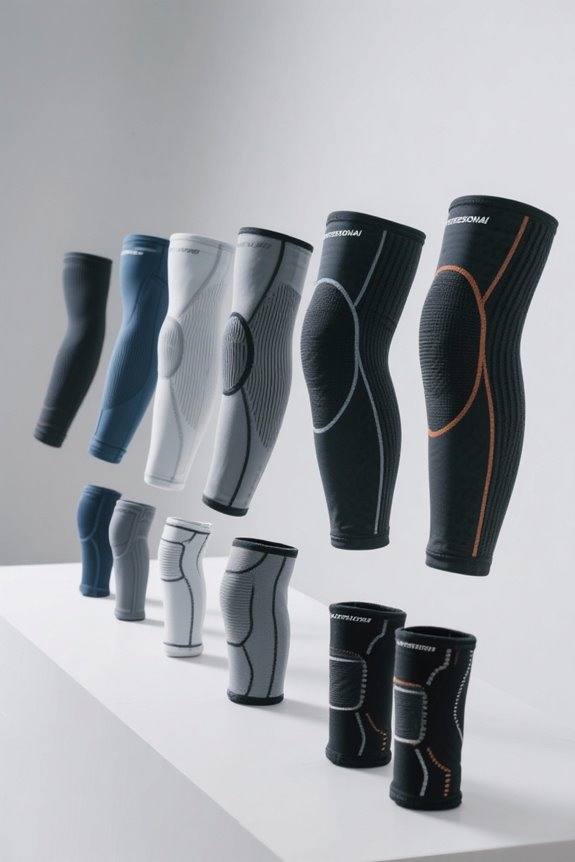
When you’re diving into the world of compression sleeves, it’s vital to contemplate the brand and product specifics, as they can greatly influence your choice. Each brand has its own size charts and measurement points, so don’t just assume a size will be the same across brands; brand compatibility matters. Some brands categorize sizes based on age or intended use, like tighter compression for performance or a looser fit for comfort. As for compression levels, these can vary, with some companies offering distinct ranges. To guarantee an accurate fit, measure around the relevant limb area at the end of the day, and don’t forget to consult each brand’s specific sizing guides. After all, a good fit is significant! Additionally, be mindful of the recommended compression level of 15-20 mmHg for effective circulation support, as this can vary between brands.
Common Sizing Mistakes to Avoid
How often do we overlook the little details that can make a big difference? When it comes to compression sleeves, common sizing pitfalls abound. For starters, failing to measure in the morning can lead to limb measurement errors, as swelling accumulates throughout the day. Also, be careful not to measure over thick clothing or with cold muscles, since this can distort your readings. Always use the manufacturer’s sizing charts instead of assuming a size based on past purchases; remember, a medium in one brand might be a large in another! Finally, don’t ignore that your limb size can change daily. Regular reassessment guarantees you keep comfort and effectiveness at their peak—just like your workout routine! Additionally, selecting a sleeve with the appropriate compression level is vital for effective support during your activities.
Recommended Measuring Practices
The key to getting the right compression sleeve starts with accurate measurements—no one wants to squeeze into something that fits like a sausage casing! First, grab a flexible tape and measure your wrist at its narrowest point. For the elbow, measure its fullest part with your arm slightly bent. Next, measure just below the armpit for your upper arm circumference. When measuring length, run the tape from your wrist to the upper arm, ensuring you’re capturing the effective arm length. Remember to record these measurements clearly as wrist, elbow, and upper arm. It’s also helpful to have someone assist you for consistency. Following these recommended measuring practices can make all the difference in finding a comfortable, well-fitting compression sleeve! Additionally, consulting sizing charts provided by brands can help ensure you select the best size for your needs.
Tailoring Fit for Special Needs
Have you ever wondered how to find the perfect compression sleeve tailored for special needs? It’s essential to take into account individual preferences, especially if you or someone you care about has unique requirements. For instance, if you’re dealing with swelling, choose a larger size to avoid overwhelming tightness. Explore adaptive designs that allow for adjustable fits, as they can adapt to changes throughout the day. If sensory processing is an issue, sizing down by 2-4 inches can provide the calming pressure needed without discomfort. Always check product specifications for precise measurements, as medical conditions may require specialized sizing. And remember, sleeves shouldn’t slip; they should offer snug support without restricting circulation. Flexibility is key for both comfort and efficacy! Additionally, consider the compression levels recommended for your specific needs, as these can significantly enhance circulation and support.
Frequently Asked Questions
Can I Wear Compression Sleeves While Sleeping?
I can wear compression sleeves while sleeping, especially if they’re approved for nighttime use. They might improve my sleep quality and circulation benefits, but I’ll check with my healthcare provider first to be safe.
How Often Should I Replace My Compression Sleeves?
I replace my compression sleeves every 3 to 6 months, as their lifespan shortens over time. Look for signs like sagging or loss of elasticity; those indicate it’s time for a replacement.
Are Compression Sleeves Suitable for All Body Types?
Yes, compression sleeves can be suitable for various body types, but it’s vital to follow sleeve fitment guidelines. I’ve found body type considerations essential for comfort and effectiveness, so accurate measurements are key.
Can I Machine Wash My Compression Sleeves?
Yes, I can machine wash my compression sleeves, but I make certain to follow material care guidelines. Proper washing can extend sleeve durability, keeping them effective longer, as I’m aiming for 4-6 months of regular use.
Do Compression Sleeves Help With Soreness Relief?
Yes, compression sleeves definitely help with soreness recovery. I’ve experienced firsthand compression benefits like reduced muscle soreness and faster recovery times after exercise, making them a valuable addition to my post-workout routine.


