As an Amazon Associate, we earn from qualifying purchases. Some links on this site are affiliate links at no extra cost to you. Our recommendations are based on thorough research and editorial judgment.


How Long Should I Rest After a Running Injury?

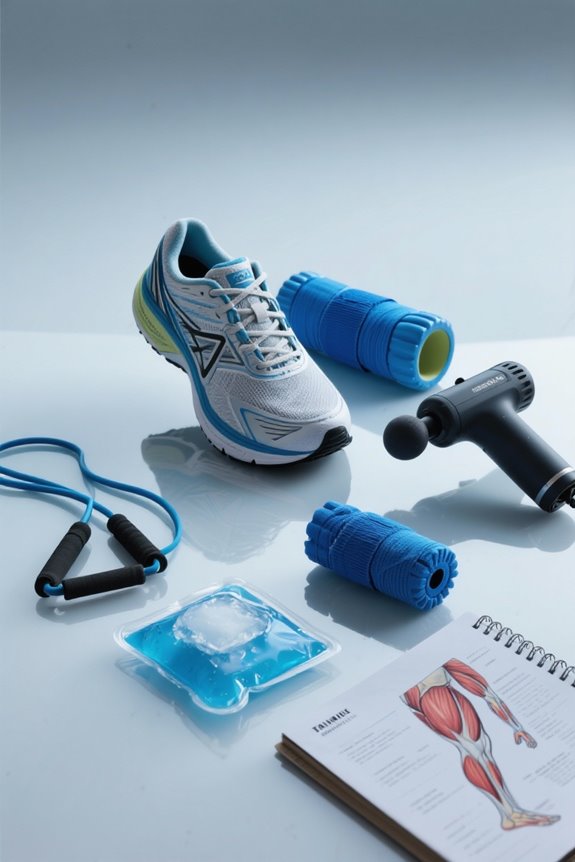
When you’ve got a running injury, the rest duration really hinges on how severe it is. For minor sprains, just a few days to one week is usually enough. But if you’re dealing with a stress fracture, you might need to rest for 6 to 8 weeks. Ice and gentle stretching can help, but always listen to your body. If you stick around, I’ll share tips for a smoother return to running and ways to avoid future injuries.
Key Takeaways
- Minor injuries like sprains generally require a rest period of a few days to one week.
- Overuse injuries, such as shin splints, may need several weeks of rest for healing.
- Stress fractures necessitate 6 to 8 weeks of avoiding all high-impact activities.
- Gentle stretching and ice application can help manage inflammation during the rest period.
- Always consult a professional if pain persists beyond expected recovery time.
Understanding Recovery Timeframes for Common Running Injuries
When it comes to running injuries, understanding recovery timeframes can feel a bit overwhelming. The median overall recovery time is about 56 days but really depends on injury classification. For example, patellofemoral pain can take anywhere from 26 to 174 days, which might make you feel like you’re waiting for the next season of your favorite show. Achilles tendonitis usually requires 6 to 12 weeks for healing. It’s essential to be diligent with recovery monitoring—checking in on your pain levels and functionality. Remember, more than 46% of recreational runners face injuries yearly. So, take that necessary time to heal, especially if you’ve had previous injuries, which can double your risk! After all, you want to run strong, not limp along. Investing in proper footwear can significantly aid in your recovery process by providing necessary support and comfort.
Recommended Rest Duration After Injury

Recovery from a running injury can vary widely, depending on the type and severity. For minor injuries, like sprains or strains, a rest duration of a few days to one week usually suffices. During this time, gentle stretching and applying ice can help ease inflammation. For overuse injuries such as shin splints, you might need several weeks off, especially if symptoms persist. Stress fractures, however, require a rest duration of 6 to 8 weeks to allow proper healing, which means no high-impact activities—think of it as avoiding dancing on a sprained ankle! Remember, keeping active with low-impact workouts can help maintain your fitness without aggravating your injury. Always listen to your body; it often knows what you need! Incorporating proper traction into your running routine can also prevent future injuries.
Guidelines for Returning to Running

Returning to running after an injury can feel like maneuvering through a maze, but with a clear plan, you can make the process smoother and safer. Start by following return guidelines: confirm you have a full, pain-free range of motion and at least 80% muscle strength compared to your uninvolved side. Begin with walk-run intervals, running 2-3 times per week. Find a comfortable baseline distance before ramping up—aim for no more than a 10% increase weekly. Remember to stick to one change at a time, whether it’s distance, speed, or terrain. Keep monitoring your body’s reactions; a little soreness is fine, but worsening pain means it’s time for a time-out. Proper arch support is essential to help maintain alignment and prevent potential injuries, so ensure your running shoes provide adequate cushioning and support. Listen to your body, and you’ll be on track.
Risks of Rapid Mileage Increase

Increasing your running mileage too quickly can lead to serious injuries, making it essential to understand the risks involved. For instance, if you spike your mileage by more than 10% in a week, you’re substantially raising your injury risk. Studies show that spikes between 10–30% increase the risk by 64%, and jumps over 100% can raise it by a staggering 128%. Remember, injuries often occur after one long run rather than from cumulative increases. It’s vital to monitor your acute:chronic workload ratio (ACWR); an ACWR above 1.5 indicates a 50% mileage increase and raises your risk further. So, take it slow, avoid those mileage spikes, and listen to your body—your knees will thank you for it later. Moreover, utilizing moisture-wicking fabrics in your running gear can help keep you comfortable and dry, reducing the likelihood of irritation during your runs.
Rehabilitation and Pain Management Techniques

Charting the path to full recovery from a running injury can feel overwhelming, but employing structured rehabilitation and effective pain management techniques can greatly ease the process. Start your rehab with criteria-based rehabilitation techniques, evaluating pain-free walking for at least 30 minutes daily. As you progress, include activities like plyometrics to strengthen your muscles, aiming for 500+ foot contacts weekly. For pain management, rest and ice are your best friends initially, but gradually reintroducing low-level activities helps, too. Monitor your pain; keep it under a 3/10 threshold to avoid setbacks. Finally, don’t forget to track your symptoms and seek help from professionals to stay on course—patience is key, and you don’t want a repeat injury! Additionally, consider choosing eco-friendly running shoes made from recycled materials to support your recovery while being kind to the environment.
Addressing Fitness Loss During Recovery
After dealing with an injury, it’s common to worry about losing fitness while you recover. The psychological effects can be challenging, but remember you can still maintain some fitness. Engaging in alternative activities like swimming or cycling can slow down detraining, especially if you’ve been running for over two weeks. In just ten days of inactivity, well-trained runners see little change in VO2 max, but after two weeks, it drops around 6%. So, consider light exercises like yoga or walking to keep your muscles engaged. Gradually easing back into running is key; this helps restore strength and form without aggravating your injury. Remember, a well-structured recovery can get you back on track faster than you might think! Incorporating alternative activities like swimming can help maintain cardiovascular fitness during your recovery.
Individualized Recovery Considerations and Injury Prevention
When you’re recovering from a running injury, it’s essential to acknowledge that no two injuries—or their recovery timelines—are the same. I’ve learned that personalized rehabilitation is vital. For example, if you’ve got runner’s knee, you might need 6-8 weeks off, while a stress fracture could take several months. Additionally, undergoing a biomechanical assessment can help identify any running form issues that might be contributing to your injury. It’s all about finding what works for you. Following a tailored rehabilitation program, complying with strengthening exercises, and including some cross-training can speed up your recovery. Remember, the goal is to return to running safely, not just to meet an arbitrary timeline. Keep listening to your body—it’s usually pretty smart! Ensuring proper shoe maintenance is crucial to prevent future injuries and maintain optimal performance during your runs.
Frequently Asked Questions
Should I See a Doctor for Mild Running Injuries?
If I experience persistent pain or troubling symptoms from mild injuries, I’d see a doctor for consultation. It’s better to be safe and get professional advice to guarantee proper recovery and avoid further issues.
Can I Run Through Minor Pain?
I’ve learned that about 128% increased injury risk comes from running through pain. Pain management is crucial; I always prioritize injury assessment when discomfort arises. Ignoring it isn’t worth the longer recovery down the line.
How Can I Prevent Future Running Injuries?
To prevent future running injuries, I focus on strength training to build supporting muscles and always guarantee I’m in proper footwear. This combination helps me stay resilient and keeps my running enjoyable and injury-free.
When Is Surgery Necessary for Running Injuries?
I’ve learned that surgery becomes necessary when surgery indicators like persistent pain or severe injury types, such as ruptured tendons or complex fractures, don’t respond to nonoperative treatments. It’s a tough decision, but sometimes essential.
What Are the Signs of a Serious Injury?
When I evaluate symptoms, serious injuries often show sharp pain at rest, swelling, or inability to bear weight. Injury classification hinges on these signs, requiring prompt medical attention if they persist or worsen.