As an Amazon Associate, we earn from qualifying purchases. Some links on this site are affiliate links at no extra cost to you. Our recommendations are based on thorough research and editorial judgment.


When Should I Use Energy Gels Versus Sports Drinks?

When deciding between energy gels and sports drinks, I recommend using gels for quick energy boosts during short, intense efforts lasting under 60 minutes. Aim for 20 to 30 grams of carbohydrates every 30–45 minutes, and don’t forget to wash them down with water. For longer workouts over 60 minutes, sports drinks are better, as they provide hydration and refill electrolytes. Keeping these guidelines in mind will help you perform at your best, and there’s more to explore!
Key Takeaways
- Use energy gels for quick carbohydrate intake during short, high-intensity workouts lasting under 60 minutes.
- Opt for sports drinks when exercising for over 60-90 minutes for hydration and energy replenishment.
- Consume energy gels every 30-45 minutes during long-duration activities, alongside sports drinks for optimal performance.
- Always drink water after taking gels to improve digestion and prevent stomach issues.
- For intense sessions lasting 45 minutes or more, prioritize sports drinks to maintain electrolyte balance and hydration.
Key Differences Between Energy Gels and Sports Drinks
When it comes to choosing between energy gels and sports drinks, understanding their key differences can really help you fuel your workouts effectively. Gels, available in various gel flavors, are compact carbohydrate sources best for quick performance boosts during high-intensity activities, while sports drinks serve as a hydration strategy that combines carbs and electrolytes. During race preparation or longer exercises, sports drinks work better due to their fluid volume, replenishing both energy needs and hydration. However, gels digest quickly, usually within 5–15 minutes, making them useful when timing is tight. Your choice depends largely on exercise type, individual preference, and how well your body tolerates different carbohydrate types and electrolyte sources, so experiment to find what works best. Additionally, compression calf guards can aid in recovery and performance, complementing your hydration and energy strategies during intense training sessions.
Understanding Energy Gels

Energy gels are like little power pouches designed to keep you going when the going gets tough. These concentrated carbohydrates deliver rapid digestion and absorption, fueling your endurance activities effectively. The blend of simple sugars and complex carbohydrates helps maintain energy levels, preventing that dreaded “bonking.” With energy gel benefits, you can top off your glycogen stores every 30-60 minutes during workouts. I recommend trying different gel flavor preferences during your training, as individual taste can impact your comfort and performance. Many gels contain electrolytes to help with hydration, and some even have caffeine to enhance alertness. Just remember, always take gels with water for excellent absorption; your stomach will thank you later! Additionally, customizable options in energy gels can cater to individual nutritional needs and preferences.
Understanding Sports Drinks

While you may think water is sufficient for hydration, sports drinks offer unique benefits that can greatly enhance your performance, especially during extended workouts. These drinks come in various sports drink types, typically containing water, carbohydrates, and electrolytes. The carbohydrates provide immediate energy, delaying muscle depletion, while electrolytes like sodium and potassium help replace what’s lost through sweat. This combination supports effective hydration strategies during exercises lasting longer than 60-90 minutes. Aim for about 30-60 grams of carbohydrates per hour for ideal benefits, and don’t forget that a light sip every few minutes can make a big difference. So, next time you’re gearing up for a long session, consider reaching for a sports drink instead of plain water. Your muscles will thank you! Additionally, incorporating motion control shoes can help enhance your stability and support during these prolonged activities.
Optimal Situations for Energy Gels
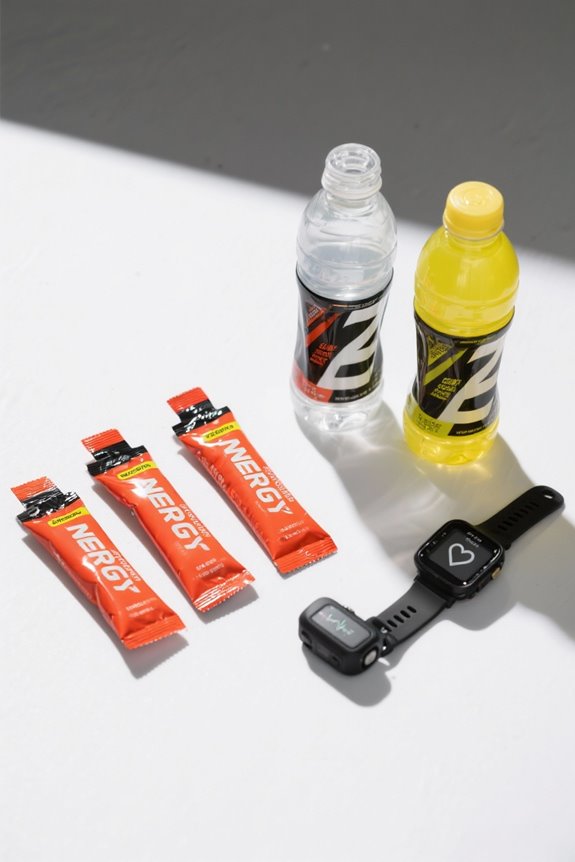
For anyone getting into endurance sports, finding the right fuel can feel like searching for a needle in a haystack. Energy gels excel during activities that last over 60-75 minutes, as they’re designed to maintain carbohydrate levels essential for endurance performance. I recommend taking 1 to 2 gels per hour, especially during high-intensity events like marathons. You might find it advantageous to try gel timing strategies—consuming a gel every 30-45 minutes for fast energy or every 45-60 minutes for slower digestion. Pairing gels with water helps absorption and reduces stomach issues. If you’re running longer events, consider caffeinated gels in the final stages to combat fatigue. It’s all about planning that gel strategy effectively to keep your energy levels steady! Additionally, it’s important to ensure your running shoes provide adequate cushioning and support to help minimize fatigue during long workouts.
Optimal Situations for Sports Drinks

When it comes to staying hydrated and fueled during extended physical activity, sports drinks can be a game-changer. For activities lasting over an hour, like marathon running or competitive soccer, sports drinks are essential due to their carbohydrate and electrolyte content. When the heat is on, and you’re sweating buckets, they help keep your hydration levels balanced, preventing dehydration before its sneaky head shows up. Electrolytes in these drinks boost retention, supporting muscle function and reducing cramps. If you’re running hard, remember the 6-8% carbohydrate concentration is ideal for replenishment. Just remember, for shorter, low-intensity sessions, plain water usually does the trick—taking a whole sports drink for a stroll might raise some eyebrows! Additionally, using reflective LED running vests during your nighttime workouts can enhance visibility and safety, ensuring you stay seen while staying hydrated.
Nutrient Composition of Energy Gels
Energy gels pack a powerful punch for athletes craving quick energy during intense workouts, often containing between 18 to 51 grams of carbohydrates per serving, with most hovering around 26 grams. The primary carbohydrate sources are maltodextrin and glucose, known for their rapid absorption. Some gels also add fructose, which uses different intestinal transporters to boost absorption. You’ll find that most gels align with the recommended 30-60 grams of carbs per hour for endurance athletes. Additionally, many gels feature branched-chain amino acids (BCAAs) to help protect muscle and fend off fatigue. When choosing a gel, keep in mind the varying nutrient compositions, and don’t forget to chase it down with water to aid in digestion and energy delivery. For optimal performance, consider how cushioning impacts satisfaction when selecting your running shoes to ensure your body can handle the demands of endurance training.
Nutrient Composition of Sports Drinks
Athletes looking for hydration options beyond energy gels often consider sports drinks, which have a different but equally beneficial nutrient profile. These drinks typically contain a carbohydrate concentration of 6-8%, providing essential fuel during workouts. You’ll find about 18 to 20 grams of carbohydrates per serving, sourced mainly from glucose and fructose, which help maintain blood sugar levels.
Moreover, sports drinks offer various electrolyte variations, like sodium, potassium, and chloride, to replace what we lose in sweat. While brands differ, some, like GoodSport™, can pack about 1193 mg of electrolytes in 12 ounces, enhancing hydration. Aim for options with balanced electrolytes for optimum effectiveness, especially if your workout exceeds 45 minutes—trust me, your body will thank you! Additionally, incorporating energy gels can provide quick energy replenishment when you need an extra boost during prolonged activities.
Electrolyte Considerations
To guarantee you’re getting the most from your workouts, understanding electrolyte considerations is essential. Energy gels often contain electrolytes but in a highly concentrated form, so I recommend pairing them with sufficient water to optimize digestion and absorption. On the other hand, sports drinks have a more diluted electrolyte concentration, serving both hydration and electrolyte replacement seamlessly. For instance, while gels might have 20 to 80 mg of sodium per gel, sports drinks can contain up to 1000 mg of sodium per liter, which is critical for maintaining electrolyte balance, especially in hot conditions. As you refine your hydration strategies, consider combining gels and drinks to avoid cramping or dehydration during your longer sessions—you wouldn’t want to be sidelined by leg cramps, after all! Using compression socks can also enhance recovery and support your legs during these intense workouts.
Impact on Hydration
When it comes to hydration during workouts, the impact of what you consume can’t be overlooked. Energy gels are concentrated sources of carbohydrates, meaning they require additional water for digestion and maintaining hydration balance. If I were to consume a gel without enough water, I might face increased risks of dehydration and discomfort. On the other hand, sports drinks deliver a diluted solution that hydrates while supplying carbohydrates and electrolytes, promoting fluid retention effectively. For my next long workout, I’d choose sports drinks to meet hydration needs efficiently. Also, it’s important to drink water when taking gels to avoid upsetting my stomach. Mixing these strategies based on my activity level can help me stay adequately hydrated and energized. Additionally, proper cushioning technologies in footwear can enhance performance, making it easier to maintain hydration throughout my workout.
Gastrointestinal Comfort and Tolerance
Gastrointestinal comfort is essential for maintaining performance during any athletic endeavor, especially when choosing between energy gels and sports drinks. Personally, I’ve found that GI symptoms can really derail your run, with studies showing 78% of triathletes reporting issues after energy gel consumption. The concentrated nature of gels often requires additional water, so remember, without proper hydration strategies, you risk delayed gastric emptying and discomfort. Sports drinks, on the other hand, offer a diluted carbohydrate solution that can help minimize these GI issues. If you’re gearing up for a longer race, consider using gels for shorter bouts and sticking with drinks for longer efforts. Scheduled hydration breaks can be crucial for maintaining energy levels, so listen to your body; figuring out what works for you can be a game changer.
Combining Gels and Drinks Effectively
Finding the right balance between energy gels and sports drinks can greatly boost your performance. Combining these two provides synergy benefits, helping you achieve ideal energy balance during your workouts. For instance, consuming a gel every 30-60 minutes along with a sports drink guarantees you meet carbohydrate intake rates—30g per hour for sessions lasting 1 to 1.5 hours, and 60g for longer efforts. Gels deliver about 25g of carbs, while sports drinks complement with hydration and essential electrolytes. Just be careful—gobbling gels without fluids can backfire, leading to digestive woes. By pairing them effectively, you can support your performance and keep fatigue at bay, like a trusty sidekick in your exercise adventures. Trust me, your muscles will thank you!
Practical Usage Guidelines for Short Intense Efforts
In order to maximize your short, intense workouts, knowing how and when to use energy gels and sports drinks can really make a difference. For energy gel usage, aim for one gel containing 20-30g of carbs every 30-45 minutes, especially for efforts under 60 minutes. Always wash it down with water to avoid stomach issues. On the other hand, if you’re engaging in intense exercise lasting about 45 minutes to 2 hours, you’ll appreciate the hydration and moderate carbs from sports drinks. They offer the perfect blend of electrolytes to replenish what’s lost through sweating. Remember, gels are compact but require a bit more prep. Ultimately, both have their place in fueling your performance!
Practical Usage Guidelines for Long Duration Activities
When you’re gearing up for long-duration activities, understanding how to effectively fuel your body can make a significant difference in your performance. I recommend consuming energy gels every 30-45 minutes during efforts lasting longer than 90 minutes to keep your energy levels steady. Don’t forget to drink water—gels require it for digestion, or you might find yourself in a world of gastrointestinal hurt. On hot days, sports drinks are your best bet, as they replenish fluids and sodium lost through sweat. Sipping sports drinks continuously provides hydration and steady carbs for activities lasting 45 minutes or more. Pay attention to your environment, and adjust your strategy based on conditions. After all, nobody wants to run out of gas—or water.
Personal Experimentation and Adjustments
Fueling your body isn’t a one-size-fits-all approach, especially when you’re aiming for peak performance. I’ve found that personal experimentation is essential. I recommend testing different gels and sports drinks during training, avoiding any surprises on race day. For example, I try various carbohydrate intakes, adjusting the grams per hour to find what feels best. Timing is also key; I often stagger my gel and drink consumption, especially before intense efforts. Pay attention to your body’s responses, as time and frequency can impact performance. Don’t forget to reflect on electrolytes, especially in hot conditions, and see if adding salt tabs helps. Remember, small adjustments can lead to big improvements. Happy experimenting!
Summary of Best Practices for Athletes
To achieve ideal performance, understanding the strengths and weaknesses of both energy gels and sports drinks is essential. When you’re engaged in activities lasting over 45 minutes, combining different fueling strategies can be beneficial. For high-intensity bursts, gels deliver concentrated carbohydrates that act quickly, but they need water to avoid gastrointestinal distress. Conversely, sports drinks provide hydration and electrolytes, critical for longer sessions, especially in heat. I recommend using gels during shorter, intense workouts and sports drinks for sustained efforts. Experiment with these hydration techniques in training to find what suits your stomach best. Remember, striking this balance can prevent dehydration and keep you on track, making your workouts more enjoyable, and maybe even less exhausting!
Frequently Asked Questions
Can I Use Both Energy Gels and Sports Drinks Together?
I’ve found that using both energy gels and sports drinks together can be tricky. Proper hydration strategies matter; gel compatibility is essential. Pair gels with water for best results and avoid stomach issues during intense activities.
Do Energy Gels Require Different Consumption Timings Than Sports Drinks?
Yes, energy gels require different timing strategies than sports drinks. I’ve found gels are best consumed strategically around 60-90 minutes into activity, while sports drinks can be sipped continuously to meet energy demands throughout exercise.
Are There Any Specific Brand Recommendations for Energy Gels and Sports Drinks?
When energy flows like a river, I turn to GU for variety, or Clif Shot for nature’s touch. For quenched thirst with flavor, Gatorade and Nuun are my go-tos. Brand comparisons make choosing delightful!
How Do Temperatures Affect the Effectiveness of Gels and Drinks?
Temperature impact considerably affects how my body absorbs gels and drinks. In cold conditions, I find my hydration levels drop, leading me to focus on consuming fluids regularly, regardless of thirst cues, to avoid dehydration.
Can Energy Gels Cause Allergies or Intolerances in Some Athletes?
Yes, I’ve noticed that energy gel ingredients can trigger athlete allergies. I’ve experienced reactions from certain additives, like artificial sweeteners and preservatives, so I always read labels carefully to avoid problems during competitions.


