As an Amazon Associate, we earn from qualifying purchases. Some links on this site are affiliate links at no extra cost to you. Our recommendations are based on thorough research and editorial judgment.

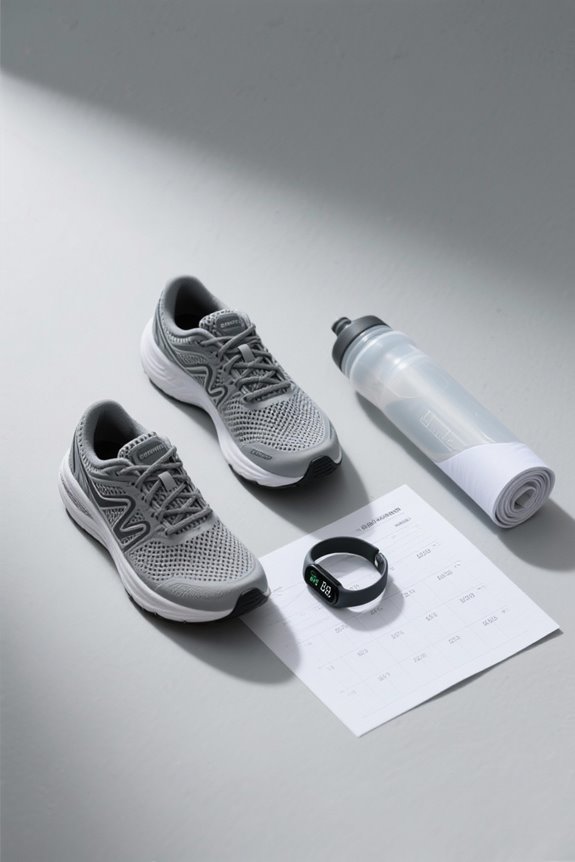
How Do I Create a Running Training Plan for Beginners?

To create a running training plan for beginners, aim for three to four running days each week, blending running and walking intervals, like 30 seconds of running followed by a minute of walking. Start with about 5 to 8 miles weekly, gradually increasing by no more than 10% each week. Don’t forget to warm up, cool down, and include rest days to prevent injuries. If you want to keep improving and stay motivated, there’s more you can learn.
Key Takeaways
- Establish a consistent schedule with three to four running days and incorporate rest days for recovery.
- Start with run/walk intervals, gradually increasing running durations as your fitness improves.
- Begin each session with a warm-up and end with a cool-down to prevent injuries.
- Invest in proper footwear with good cushioning to enhance comfort and support while running.
- Track progress and set realistic goals to stay motivated and accountable throughout your training journey.
Establishing a Running Schedule
When you’re starting a running journey, establishing a solid running schedule is key, especially if you want to feel comfortable and stay motivated. Aim for three to four running days each week to build consistency, and don’t forget to prioritize rest days. You can customize your schedule by incorporating run/walk intervals at first, say 15 seconds of running followed by 45 seconds of walking. Gradually increase these intervals as your fitness improves. Consider adding a “long run” once a week to boost endurance. Remember, keeping your effort moderate is essential; no one wants to sprint all the time. Use a calendar or app to track your progress. After all, nothing says “I’m committed” like a little digital cheerleading from your fitness tracker! Additionally, consider using an Apple Watch for advanced health monitoring to enhance your running experience.
Warm-Up and Cool Down Practices

To avoid injuries and improve your running performance, incorporating effective warm-up and cool down practices is essential. I recommend starting with a 5-10 minute light aerobic activity, like brisk walking or jogging, to warm your body up. Then, engage in dynamic stretching, focusing on key muscles like your quads, hamstrings, and calves. Movements like leg swings, arm circles, and butt kicks can really get your joints ready!
After your run, don’t skip the cool-down! Allocate another 5 minutes for static stretching; holding each stretch for at least 30 seconds. This helps with recovery techniques and reduces muscle soreness. Consistency here can improve your running efficiency and keep you on track. Remember, nobody likes stiff legs after a run! Additionally, wearing the right shoes with adequate cushioning can significantly enhance your comfort during these practices.
Understanding Walk-Run Intervals

Understanding walk-run intervals can be a game changer for anyone new to running, particularly for those worried about injury or fatigue. This walk-run strategy alternates between running and walking, allowing your body to recover properly while still building endurance. I recommend starting with short run intervals, like one minute of running followed by two minutes of walking. This interval pacing helps maintain a consistent effort while preventing burnout. Remember, your walking breaks should be intentional—keep moving to sustain your heart rate. Adjust the run-to-walk ratio based on how you feel, ensuring you’re pushing yourself but staying comfortable. Ultimately, it’s about finding a balance that keeps you motivated and engaged without feeling overwhelmed or exhausted. Incorporating adequate cushioning in your running shoes can further enhance comfort during these intervals.
Progressing Your Running Duration

As you start incorporating more running into your training plan, it’s essential to focus on gradually increasing your running duration to avoid burnout and injury. Begin with short running intervals, like 2 minutes of running followed by 1 minute of walking. Each week, aim to increase your running time by 1-2 minutes, while keeping the total workout around 30 minutes. This method supports endurance building and allows for essential recovery. If running feels tough, slow your pace; it’s all about feeling comfortable. Don’t hesitate to take extra walking breaks when needed. Remember, consistency is key! Running three times a week, with at least one rest day in between, will help you progress steadily while keeping things manageable and fun. Additionally, consider investing in flexible running shoes that provide comfort and support as you increase your running durations.
Weekly Mileage and Injury Prevention

While it might be tempting to dive headfirst into running, keeping a mindful eye on your weekly mileage can greatly aid in preventing injuries. Beginners should start with 5 to 8 miles per week, spread across three days, aiming for 2 to 3 miles per run. As my fitness improves, I can gradually increase to 10 to 15 miles per week. It’s essential to avoid raising mileage by more than 10% weekly; otherwise, a surprise visit from an overuse injury could occur! I recommend including rest days and spacing runs, allowing recovery time between harder sessions. Always start and end workouts with a warm-up and cool-down to keep my muscles happy—trust me, they’ll thank you for it! Additionally, selecting the right shoe weight can significantly impact my running performance and comfort.
Incorporating Cross-Training and Strength Work
Incorporating cross-training and strength work into your running routine can really boost your overall fitness levels and help you avoid injuries. Cross-training benefits include activities like cycling or swimming, which enhance your aerobic conditioning while giving your joints a break. Aim for 2-4 cross-training sessions per week. For strength training effectiveness, focus on lower-body exercises like squats and lunges—or consider resistance training twice a week to build muscle endurance. Functional movements improve running efficiency, so even basic, bodyweight exercises can be beneficial. Plus, adding yoga can enhance flexibility while supporting recovery. Balancing these elements can keep your running fresh and help prevent burnout, or, as I like to say, keep those legs healthy enough for that next cupcake run! Additionally, incorporating GPS accuracy into your training can help you track your progress and ensure that your workouts are effective.
Importance of Hydration and Nutrition
Running isn’t just about putting one foot in front of the other; hydration and nutrition play pivotal roles in maximizing performance and recovery. Crafting individualized hydration strategies helps prevent dehydration, which can impair performance by as much as 6-7%. Regularly monitoring your hydration status, through methods like pre- and post-exercise body weight checks, is essential to maintain ideal electrolyte balance. Nutrition timing also matters; consuming carbohydrates and proteins around your training sessions fuels your muscles and aids recovery nutrition. Remember, there are hydration misconceptions out there, like thinking plain water is always enough. Sometimes, an electrolyte drink can work wonders post-run, especially when high sodium levels help retain fluids better than water alone. Additionally, hydration packs are a great tool for ensuring you stay hydrated during long runs. Keep these factors in mind, and you’ll run smarter!
Managing Intensity and Effort Levels
When it comes to managing intensity and effort levels in your running training plan, it’s essential to understand how to gauge your exertion accurately. I recommend using several methods like the Rate of Perceived Exertion (RPE), which ranges from GREEN (low effort, where you can chat) to RED (85-90% max effort). Building your intervals is key—start with 5-10 minutes at a low intensity, then alternate between YELLOW and RED efforts. Maintain a majority of your training at low intensity, allowing your body to adapt gradually. Remember, a little bit of high-intensity work—think less than 30% of your training—can boost endurance but should be balanced carefully, or you might find yourself gasping for air in no time! Additionally, investing in supportive footwear can significantly enhance your comfort during runs, especially if you experience heel pain.
Tracking Progress and Setting Goals
Tracking your running progress and setting achievable goals are fundamental parts of any training plan. I recommend using a simple pen and paper, a smartwatch, or one of the many running apps to log your workouts, distances, and paces. For instance, you might start with a basic goal of running one mile, then gradually aim for a 5K. Consider tracking metrics like pace and duration, which will show your improvement over time. Don’t forget to monitor your heart rate for deeper insights into your fitness levels. To stay motivated, visualize your progress through bullet journals or digital trackers. Remember, it’s essential to balance your goals with recovery to avoid injuries—nobody enjoys running on crutches! Additionally, incorporating quality cushioning and support can significantly enhance your performance and comfort during runs.
Frequently Asked Questions
What Running Shoes Are Best for Beginners?
When I started running, I found lightweight shoes with a good fit essential. Models like Asics Novablast and Brooks Ghost balance cushioning and support perfectly. Finding the right shoe type made all the difference in my comfort!
How to Deal With Soreness After Running?
To deal with soreness after running, I’ve found that incorporating recovery techniques like active recovery, proper stretching, and careful monitoring of my training load helps with soreness relief and keeps me on track with my running goals.
Can I Run if I Have Knee Pain?
You can run with knee pain, but I’d recommend running modifications. Shorter strides and proper alignment can help. If pain worsens, though, it’s best to stop and consult a medical professional for guidance.
What to Do if I Miss a Training Session?
If I miss a session, I usually reschedule workouts for the next day, maintaining my plan’s order and intensity. I remind myself that it’s okay; consistency matters more than a single missed session.
How Can I Stay Motivated to Run Consistently?
“Slow and steady wins the race.” I stay motivated by celebrating small running rewards, setting achievable goals, and connecting with a supportive community. Using these motivational strategies helps me stick with my running routine consistently.