As an Amazon Associate, we earn from qualifying purchases. Some links on this site are affiliate links at no extra cost to you. Our recommendations are based on thorough research and editorial judgment.

How Often Should I Drink Water During a Long Run?

During a long run, I recommend drinking about 7-10 ounces of water every 10-20 minutes. This keeps you hydrated and helps prevent fatigue. If you’re sweating more, you might need up to 250ml per session. Before you start, aim for 16-20 ounces 2-3 hours beforehand, and another 10-12 ounces just before running. It’s like adding fuel to your engine—keep it topped off! If you’re curious about optimizing hydration, there’s plenty more to explore.
Key Takeaways
- Aim to drink 7-10 ounces of water every 10-20 minutes during your long run.
- Target approximately 50ml of fluids every 20 minutes to stay hydrated effectively.
- Drink an additional 10-12 ounces just before starting your run for optimal hydration.
- For runs over an hour, include electrolyte drinks to replenish lost minerals.
- Listen to your body and adjust your fluid intake based on individual sweat rates and environmental conditions.
Understanding Hydration Needs for Long Runs
Hydration is an essential aspect of successful long-distance running, and understanding your hydration needs can make all the difference in performance. The science behind hydration reveals that water plays a vital role in transporting nutrients, regulating body temperature, and aiding digestion. It’s all about personalized hydration; what works for one runner may not suit another. Generally, losing more than 2% of your body weight in sweat can seriously impair athletic performance. To counter this, I recommend drinking 16-20 ounces of water two to three hours before your run. During your run, monitor your fluid intake and aim for 7-10 ounces every 10-20 minutes. Keeping a close eye on your hydration status can save you from those dreaded cramps and fatigue! Remember, using a hydration belt can help you maintain this fluid intake seamlessly while on the go.
Recommended Fluid Intake During Long Runs

Whether you’re gearing up for a half-marathon or just a weekend long run, knowing how much fluid to consume is essential for peak performance. I recommend aiming for approximately 50ml of fluids every 20 minutes, but some may need up to 250ml depending on individual sweat rates and conditions. Human bodies typically absorb about 750ml to 1 liter per hour during running, so monitoring your fluid intake patterns is vital. Using hydration technology, like smart water bottles, can help you track this effectively. Also, sipping regularly, instead of gulping large amounts infrequently, maximizes absorption and comfort. Remember, hydration isn’t just a pre-run checklist; keep sipping throughout your run to stay at your best!
Factors Influencing Individual Hydration Requirements

On long runs, fluid needs vary widely based on a number of personal factors. For instance, my body size and composition play an essential role—larger individuals tend to sweat more and need to hydrate accordingly. Those with higher muscle mass, like me, might require frequent hydration to maintain balance. Then, there’s running intensity; when I push my pace, my heart rate rises, elevating sweat loss. Environmental conditions matter too; hot, humid days make me sweat buckets. Finally, genetic factors and behavioral patterns shape how I respond to thirst cues. To stay on top of hydration, I aim for around 0.5 to 0.7 grams of sodium or electrolytes per liter of hydration beverage, especially for those lengthy endeavors. Choosing the right hydration belt can significantly enhance my ability to stay hydrated during these long runs.
Signs of Dehydration and Overhydration

While running long distances, it’s essential to keep an eye on how your body reacts to fluid levels, as recognizing the signs of dehydration and overhydration can make or break your performance. Common dehydration symptoms include excessive thirst, dry mouth, and dark yellow urine, indicating the need to rehydrate. You might also feel fatigue or dizziness, which signals your body’s fluid levels are dropping. On the flip side, overhydration risks manifest as headache, nausea, and confusion due to diluted blood sodium. Balancing your fluid intake is vital; too little water leads to dehydration, while too much can create chaos in your electrolyte levels. Proper sizing for compression sleeves can also help support your performance during long runs, so listen to your body—it usually knows best!
Optimal Timing for Fluid Consumption

To maximize your performance on those long runs, you can’t underestimate the importance of when and how much you hydrate. Start by drinking 16-20 ounces, or about 500-600 ml, of fluid 2-3 hours before your run. This pre-run hydration promotes ideal absorption and helps prevent early dehydration. You can top off with an additional 10-12 ounces just before starting, but be cautious not to gulp too much, as that could lead to discomfort. During your run, aim to drink every 15-20 minutes, targeting about 50-250 ml each time. Staying on top of your hydration not only maintains peak hydration but also keeps your energy levels steady, making your run more enjoyable and less of a sweat-fest—literally!
Methods to Carry Water During Runs
Finding the right method to carry water during your runs can make a significant difference in your overall comfort and performance. Handheld bottles, typically holding 10 to 22 ounces, are great for shorter runs, while hydration packs are ideal for longer distances, offering 1 to 3 liters of liquid.
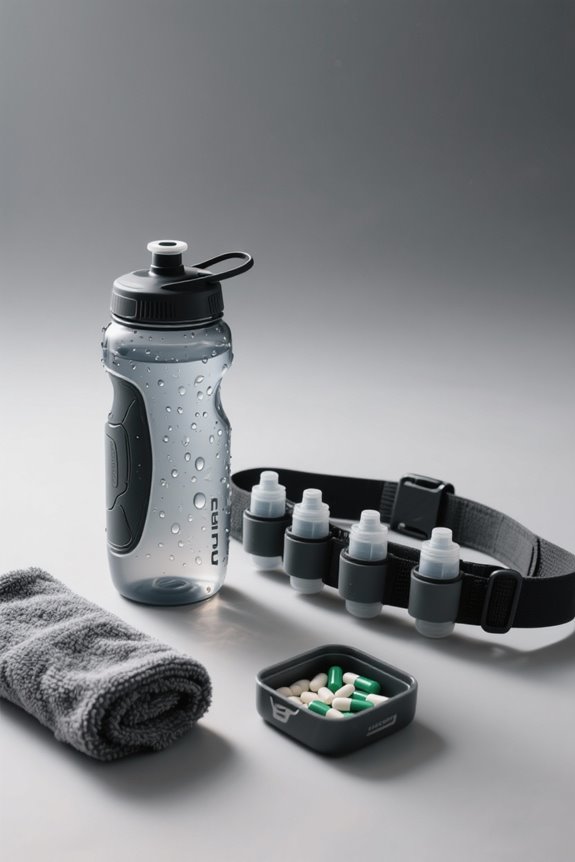
I favor lightweight handheld bottles with adjustable straps, which let me run hands-free and still access essentials like my phone. Hydration packs also provide ample storage for nutrition and gear, perfect for trail runs. A good hydration belt can hold multiple small bottles, distributing weight evenly to avoid bouncing. Remember, the choice comes down to your running style, distance, and personal preferences—after all, no one wants to fumble mid-stride! Consider options like the Ultimate Direction Hydrolight Belt for a streamlined hydration solution during your adventures.
Pre-Run and Post-Run Hydration Strategies
Understanding pre-run and post-run hydration strategies is essential for any runner looking to optimize performance and recovery. For pre-run hydration, aim to drink about 16 ounces of fluid two hours before your run. This allows time for absorption and helps reduce bathroom breaks during your workout. Just before you lace up, sip another 6–8 ounces to top off hydration. For post-run recovery, replenish 16–24 ounces of fluid for every pound lost during your run. Water works well for shorter runs, but consider electrolyte drinks with key minerals for longer distances or hot weather. It’s all about balance—don’t overdo it just before running, or you might end up sprinting for a restroom! Additionally, maintaining proper hydration during extended training sessions is crucial for overall performance and recovery.
Monitoring and Adjusting Hydration Levels
Monitoring your hydration levels during a long run can be a game changer for your performance and overall well-being. I recommend conducting a hydration assessment using simple tools like urine color and body weight. If your urine turns dark yellow or amber, it’s time to sip more water. Weighing yourself before and after a run can show you fluid loss—each kilogram lost equates roughly to one liter of fluid needing replacement. Additionally, consider tracking your sweat rate to personalize your intake; that data can help you avoid over- or under-hydration. Utilizing hydration diaries or even mobile apps can keep you on top of your hydration game. Remember, it’s all about staying in that sweet spot—neither too dry nor swimming! Investing in a running belt with hydration features can also help you stay hydrated on the go, especially with options that include BPA-free bottles for safe drinking.
The Role of Electrolytes in Hydration
When you’re tackling a long run, don’t underestimate the critical role electrolytes play in keeping you hydrated and performing well. Electrolyte balance is essential, as these charged particles help regulate fluid movement, nerve impulses, and muscle contractions. If you sweat extensively, you could lose up to 2,000 mg of sodium per liter, so plain water alone won’t cut it. I’d recommend supplementing with electrolyte drinks, especially for runs over an hour, to maintain hydration efficiency and combat cramping. A well-formulated drink often costs around $2 per serving, but don’t skip it! Trust me, replenishing electrolytes can be the difference between hitting a wall and breezing through those final miles. Keep your body happy with electrolytes, and you’ll thank yourself later! Additionally, consider the importance of proper support in your running shoes to avoid injury and maintain performance.
Frequently Asked Questions
Can I Drink Flavored Water During My Long Run?
Absolutely, I enjoy drinking flavored water during my long runs. The flavored benefits keep me hydrated and motivated. Plus, it caters to my taste preferences, making it easier to maintain my fluid intake throughout.
Should I Avoid Caffeine Before Running?
Running’s like a fine-tuned engine; I wouldn’t skip caffeine before a run. Its effects elevate my performance, but keep pre-run hydration in check to dodge jitters. Balance’s key for a smooth, enjoyable ride!
What Are the Consequences of Drinking Too Much Water?
Drinking too much water can lead to overhydration risks like headaches, nausea, and even confusion. I’ve experienced water retention that made my runs uncomfortable; maintaining a balance is essential for both performance and health.
How Do Altitude and Hydration Needs Relate?
Like climbing a mountain, understanding altitude effects on hydration needs is essential. My hydration strategies change considerably; I remember to drink more frequently and include electrolytes, ensuring I avoid dehydration and maintain performance during high-altitude runs.
Is It Necessary to Hydrate if It’s Cold Outside?
Absolutely, it’s essential to hydrate in cold weather. It helps with body temperature regulation, even if I don’t feel thirsty. Staying mindful of cold weather hydration keeps my performance steady and my system balanced.


