As an Amazon Associate, we earn from qualifying purchases. Some links on this site are affiliate links at no extra cost to you. Our recommendations are based on thorough research and editorial judgment.


How Do I Calculate My Hydration Needs for Running?

To calculate your hydration needs for running, start by weighing yourself before and after a run to find your sweat rate. For each pound lost, aim to drink about 16-24 ounces of fluid afterward. During runs, you should drink about 200-300 ml every 10-20 minutes, adjusting based on conditions. Don’t forget electrolyte drinks, especially for longer runs—they’ll help with absorption. Keep track of your urine color; it’s a simple way to monitor hydration. Stick with me, and I’ll share more tips!
Key Takeaways
- Weigh yourself before and after running to measure fluid loss and adjust hydration needs accordingly.
- Track your fluid intake by weighing beverages before and after use to ensure accurate hydration.
- Aim for 200-300 ml (7-10 fl oz) of fluids every 10-20 minutes during your run.
- Consider weather, run duration, and individual factors to tailor your hydration strategy effectively.
- Rehydrate within 30 minutes post-run with electrolytes, aiming for 16-24 ounces per pound lost.
Understanding Sweat Rate and Its Importance
When I think about hydration and running, I realize that understanding your sweat rate is crucial for optimizing your performance. Your sweat composition, which includes essential electrolytes, plays a critical role in maintaining your fluid balance. If you lose just 2% of your body weight through sweat during a run, you might experience a drop in performance by around 20%. So, knowing your sweat rate helps you tailor your hydration plan to replace lost fluids and maintain electrolyte balance. For longer runs, especially over four hours, consider replacing about 50-80% of the sodium you’ve lost. While it’s a bit intimidating, think of it as a science project aimed at keeping you cool and functional—quite literally! Additionally, using a hydration vest during your runs can greatly enhance your ability to carry fluids and essentials without compromising your comfort.
How to Measure Your Sweat Rate
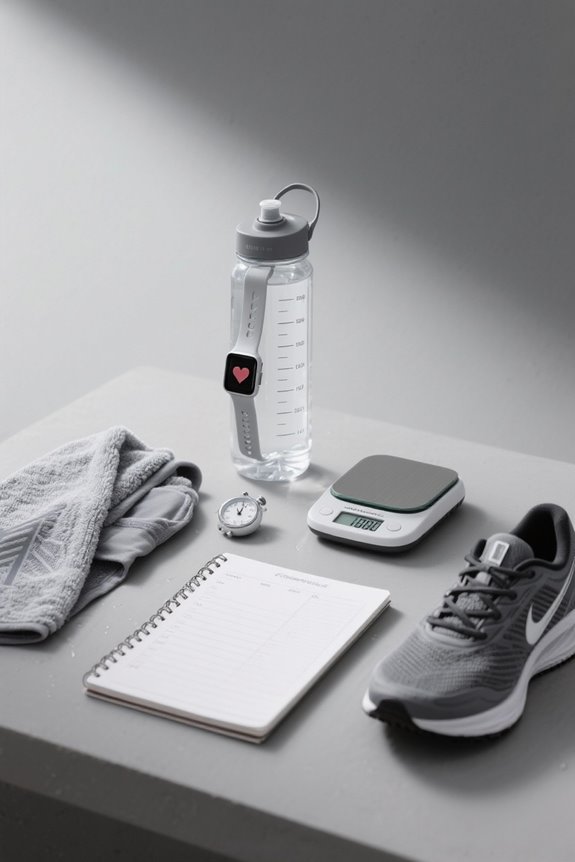
Measuring your sweat rate isn’t just a quirky science experiment; it’s a practical way to optimize your hydration during runs. To start, I recommend using accurate weighing scales. Weigh yourself before and after exercise, ensuring you’re dry and have emptied your bladder. Record the weight twice for accuracy. During your run, keep track of all fluid intake, weighing bottles before and after use. For sweat collection, consider using absorbent patches, which are easy to manage during runs. The measurement techniques can vary, but gravimetric methods are reliable. By calculating the difference in weight and considering your hydration levels, you can determine your sweat rate and adjust your fluid intake accordingly. Remember, knowledge is power—especially when it comes to hydration! Additionally, using compression therapy sleeves can enhance recovery and minimize soreness, thereby improving your overall running performance.
Factors Affecting Your Hydration Needs
Understanding the factors affecting your hydration needs is essential for optimizing your running performance, especially when you’re out on the trail or road. Weather conditions, like heat and humidity, greatly influence your sweat rate and fluid loss. Individual factors, such as your fitness level, age, and body size, alter how much you need to hydrate. Run characteristics—like duration, intensity, and timing—shape your fluid requirements, too. Don’t forget nutritional factors; consuming fruits and vegetables can aid your hydration, as can electrolyte-rich drinks for longer runs. Finally, environmental adaptations play a key role. As you acclimate to heat or altitude, your hydration needs might change. Choosing lightweight hydration belts can also enhance your comfort and help you stay hydrated effectively, so adjust your strategy accordingly and don’t wait until you’re thirsty to drink!
Fluid Replacement Guidelines During Running
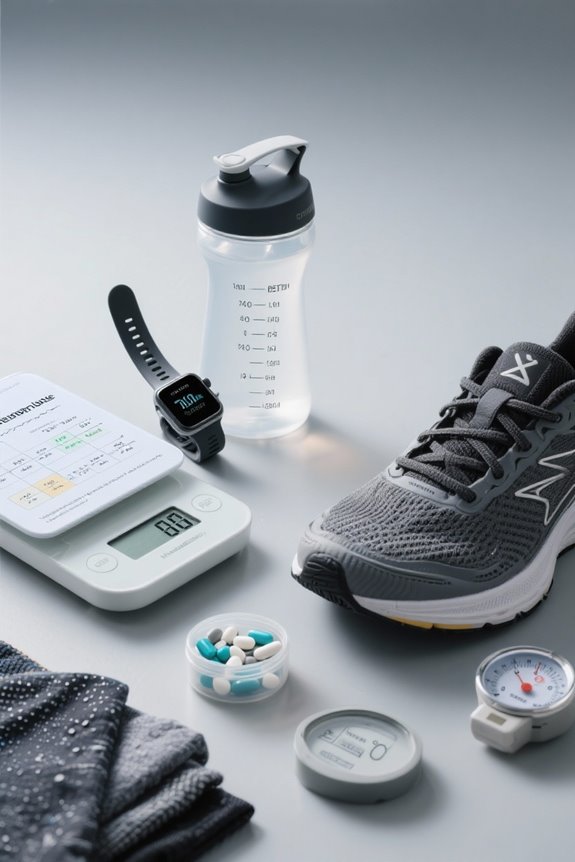
Proper hydration during running is essential not only for your performance but also for your overall well-being. To maintain hydration, I recommend drinking 200-300 ml (7-10 fl oz) every 10-20 minutes while running. Before you hit the road, it’s smart to consume 500-600 ml (17-20 fl oz) about 2-3 hours prior. If you’re tackling long distances or running in the heat, your fluid needs may spike. Hydration products like sports drinks with 6-8% carbohydrates and electrolytes can help with both fluid absorption and energy. Remember, when running a marathon, aim for 0.4 to 0.7 liters of fluid per hour, ensuring you replace no more than 80% of your fluid loss for a solid electrolyte balance. Additionally, using a hydration belt can help you easily carry the necessary fluids and stay focused on your race.
Post-Run Hydration Recovery Strategies
As you wrap up your run, don’t underestimate the importance of rehydration; it can greatly influence how you feel in the hours that follow. Aim to start drinking within 30 minutes, preferably an electrolyte drink that contains sodium, potassium, and magnesium. It’s essential for muscle recovery. Combine your drink with a post-run snack, ideally with a 3:1 or 4:1 carb-to-protein ratio, like a banana with nut butter. This not only restores glycogen but also aids muscle repair. Avoid chugging, though; sipping fluids throughout the hour helps prevent overhydration. After all, no one wants a ‘water belly’ while lounging post-run! Balancing fluids not only keeps you energized but also prevents muscle cramps and fatigue. Additionally, wearing lightweight gear can help you stay comfortable and focused on hydration during your run.
Assessing Your Hydration Status
Maintaining proper hydration isn’t just about drinking water; it involves evaluating your hydration status with some effective methods. One of the best hydration methods I’ve found is urine analysis, specifically through Urine Specific Gravity (USG) testing. Using refractometry, you can get a reliable measurement with a smaller sample and minimal cost, usually around $50-$100 for a device. This method reveals how concentrated your urine is, helping determine if you’re adequately hydrated. Alternately, while reagent strips seem easier, they can lack accuracy. On the blood side, plasma osmolality tests provide insights too, but they might complicate hydration assessment. Combining these methods gives you a more complete picture, so you can stay in top form while running! Additionally, hydration support is essential for staying hydrated on long runs and hikes, ensuring optimal performance.
Monitoring Hydration Through Urine Color and Volume
Urine color and volume are surprisingly effective tools for gauging your hydration status. By using a simple urine color chart, I can check my hydration level. Lighter shades indicate better hydration, while darker hues hint at dehydration. If my urine color shifts from 1 to 7 on the eight-point scale, I could be about 5.2% dehydrated. Additionally, monitoring urine volume plays an important role; low urine volume often accompanies darker urine, flagging potential hydration issues. I’ve learned to combine these observations for a more thorough urine analysis. It’s essential to take into account personal factors, like diet or exercise intensity, that may skew results. So, next time nature calls, take a moment to assess your hydration health! Staying properly hydrated during runs can be supported by using a running hydration belt, which allows for easy access to fluids while on the go.
Practical Tips for Staying Hydrated While Running
How can you stay properly hydrated while running? To begin, I always consume 500–600 ml of fluid 2–3 hours before my run. Just before I start, I sip another 200–300 ml for an extra hydration boost. During my run, I take small sips every 10 minutes, especially in hot conditions. I find carrying a hydration pack or belt essential, as water stations might be MIA. For runs over an hour, I use electrolyte drinks to maintain my sodium balance and prevent muscle cramps. Remember, listening to your body is vital! If you’re feeling overly thirsty or cramping, it’s time to hydrate more. Adjustable sizing is crucial for ensuring a secure fit of your hydration gear. Keeping these hydration techniques in mind can greatly enhance running performance and overall enjoyment!
Frequently Asked Questions
How Do I Adjust Hydration Needs for Altitude Running?
When it comes to altitude acclimatization, I always emphasize adjusting hydration strategies. I increase my fluid intake substantially, focusing on electrolytes to avoid dehydration. Staying proactive about hydration makes all the difference during my runs.
Can I Use Sports Drinks Instead of Water?
Absolutely, I find sports drinks beneficial for intense workouts. They offer hydration alternatives by replenishing electrolytes and energy. However, I stick to water for shorter sessions to avoid excess sugar intake. Balance is key!
What’s the Best Time to Hydrate Before a Run?
I’ve found that ideal timings for hydration strategies mean drinking 17-20 fl. oz. a few hours before running, then an extra 8 oz. right before. It really helps me feel my best during the run.
Does My Diet Influence My Hydration Needs?
Absolutely, my diet considerably influences my hydration needs. Nutrient balance plays an essential role; a higher intake of electrolytes can enhance dietary hydration, while poor nutrition may leave me needing more fluids to stay balanced.
How Can I Remember to Hydrate During Long Runs?
During long runs, I picture each sip as a small victory. I set reminders on my watch and mentally mark mileposts to incorporate hydration strategies naturally. These reminder techniques keep me refreshed and energized throughout my journey.


